
Two facilities can buy equipment around the same time, run similar operations, and end up with completely different outcomes five years later. One’s still running smoothly with routine maintenance. The other has already gone through a replacement, maybe two. The gap usually isn’t about luck or brand loyalty – it comes down to whether the system was actually built to match the job in the first place.
It’s easy to underestimate how much this decision matters when you’re standing in front of a catalog trying to compare specs. But compressed air equipment isn’t something you swap out casually. It gets tied into your workflow, your production schedule, your maintenance budget. Getting it right the first time saves a lot more than money – it saves the kind of downtime that throws off everything else.
The Type of Compressor Sets the Tone for Everything Else
A rotary compressor, most commonly seen as a screw compressor, works on a continuous rotary motion rather than the up-and-down piston action older designs rely on. That difference matters more than it sounds. A rotary compressor tends to run smoother, generate less vibration, and hold up better under long, steady workloads – which is exactly why they’re the standard choice for facilities that need air running most of the day.
Compare that to a piston-driven setup, which is built more for shorter, intermittent use. Neither is objectively “better” – it depends entirely on how the equipment gets used. A piston unit pushed into constant, all-day service will wear out faster than it should, while a heavier rotary unit sitting idle most of the time is just an oversized, overpriced solution to a smaller problem. The mismatch, more often than not, is where premature failure starts.
Storage Capacity Isn’t Just an Afterthought
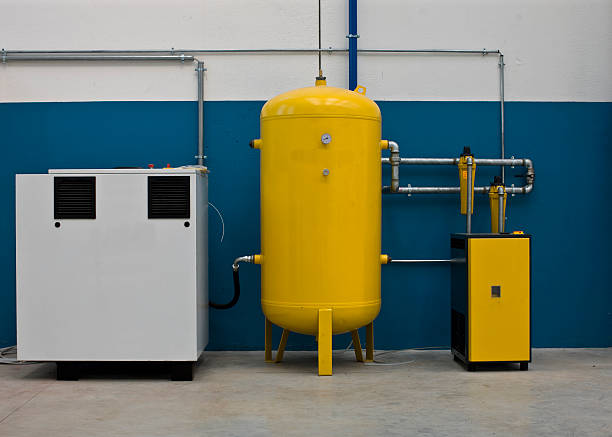
People tend to focus almost entirely on the compressor itself and treat the tank as a minor detail. That’s a mistake. An air receiver tank does more than just hold air – it buffers pressure swings, reduces how often the compressor has to cycle on and off, and takes real strain off the motor over time. Skimp on tank size relative to your system’s demand, and the compressor ends up working harder and cycling more often than it should, which shortens its lifespan regardless of how good the unit itself is.
Material matters here too. Galvanized tanks resist rust far better in humid or coastal conditions, where a standard tank might start corroding within a few years. Foam tanks serve a more specialized role, typically in fire suppression systems where compressed air pushes foam concentrate through the lines. None of these choices are interchangeable, and picking based on price alone often just shifts the problem down the line.

Environment Plays a Bigger Role Than People Expect
The same compressor can perform completely differently depending on where it’s installed. Heat affects cooling efficiency. Dust clogs filters faster than expected, especially in manufacturing environments without proper ventilation. Cold conditions can introduce condensation issues that catch people off guard months into operation. None of this shows up clearly on a spec sheet, which is exactly why it gets overlooked so often – right up until it starts causing problems.
For operations that genuinely run air continuously – production floors, large workshops, facilities with round-the-clock shifts – a screw air compressor is usually the more sensible long-term investment. It’s designed for exactly that kind of sustained demand, and a well-maintained screw air compressor can run reliably for years without the frequent breakdowns that plague equipment pushed beyond what it was built for.
Noise matters too, particularly for indoor setups. A unit that’s technically powerful enough but too loud for the space ends up being a daily annoyance for anyone working nearby, which eventually turns into a complaint someone has to deal with.
Power Source and How Hard You’re Actually Running It
Fixed electric units remain the standard for most industrial and commercial setups – predictable, efficient, and generally cheaper to run over the long haul. Portable gasoline-powered compressors make more sense for outdoor work, remote job sites, or anywhere a stable power source isn’t guaranteed. And usage frequency should drive the final decision more than anything else. Equipment running nearly nonstop needs to be rated for continuous duty. Occasional or seasonal use rarely justifies paying for the heaviest-duty option on the shelf.
The Real Takeaway
Longevity in a compressed air system isn’t really about buying the most expensive equipment available – it’s about matching pressure, flow, tank capacity, and compressor type to how the operation actually functions day to day. Get that alignment right, and the system tends to run quietly in the background for years without demanding much attention. Namerah approaches every setup with that same mindset, focusing on equipment that fits the actual job rather than pushing a generic solution that looks good on paper but falls short in practice.
FAQs
Q1: What is a rotary compressor used for?
A rotary compressor provides a continuous supply of compressed air and is commonly used in manufacturing, workshops, processing, and industrial applications.
Q2: What is the purpose of an air receiver tank?
An air receiver tank stores compressed air, helps stabilize system pressure, reduces pressure fluctuations, and supports periods of higher air demand.
Q3: What are the advantages of a screw air compressor?
A screw air compressor is designed to deliver consistent compressed air and can be suitable for operations requiring continuous and reliable airflow.
Q4: How does an air receiver tank support compressor performance?
It provides additional compressed-air storage, helping manage demand changes and reduce frequent compressor cycling during operation.
Q5: How do businesses choose the right compressor system?
Businesses should evaluate airflow requirements, operating pressure, duty cycle, energy use, installation space, maintenance needs, and application conditions.