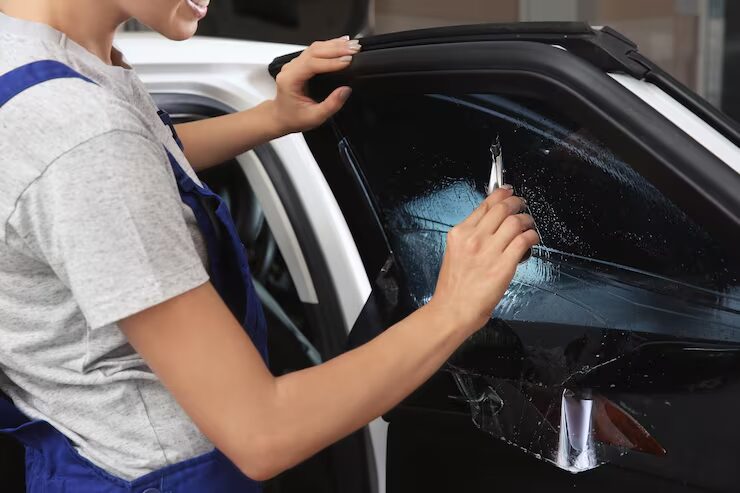
Walk into any tint shop and you’ll hear the phrase “ceramic tint” thrown around like it’s the obvious choice. And honestly? It usually is. But most people don’t actually understand why — they just know it costs more and sounds better. That’s not a great way to spend a few hundred dollars.
Here’s what actually separates Ceramic window tint from everything else on the market, and why the distinction matters more than most people realize.

Not All Tint Is Created Equal
The window film industry has four main categories: dyed, metalized, carbon, and ceramic. Each one works differently, lasts differently, and protects differently.
Dyed Film — The Budget Option
Dyed film absorbs heat rather than blocking it. It’s the cheapest option and works fine in mild climates, but it fades relatively quickly and doesn’t reject infrared heat well. You might get decent privacy, but the thermal comfort benefits are limited.
Metalized and Carbon Films
Metalized film reflects heat using tiny metallic particles, which is more effective than dye absorption. But those metal particles interfere with electronics — phone signals, GPS, Bluetooth, even keyless entry on some vehicles. Carbon film is a step up from metalized but still doesn’t reach the heat rejection levels of ceramic.
Where Ceramic Pulls Ahead
Ceramic window tint uses non-conductive nano-ceramic particles. No metal means no signal interference. No dye means no fading. The heat and UV rejection numbers are consistently higher, and the film maintains its performance for years. If you live somewhere hot, drive long distances, or have a car with a nice interior worth protecting, ceramic is the only film that makes long-term sense.
The Heat Rejection Argument
People often assume that a darker tint means more heat rejection. That’s not how it works.
Visible Light vs. Infrared Heat
The sun sends three types of radiation through your windows: visible light (what you see), UV rays (what damages skin and fades interiors), and infrared rays (what you feel as heat). Dyed tints block visible light reasonably well. Ceramic film targets infrared specifically.
You can have a light ceramic tint — say, 70% VLT — that still blocks 80–90% of infrared heat. That means a nearly clear window that keeps your car significantly cooler. This is why ceramic is popular for windshields, where legal tint limits are often very low but heat reduction is still wanted.
Longevity and Why It Matters Financially
Dyed film might need replacing within three to five years. Ceramic film, installed correctly, can last the life of the car without significant degradation.
The Real Cost Calculation
When you break down ceramic tint over ten years, the cost per year often comes out comparable to replacing cheaper film twice. You also avoid the labor cost of removal and reinstallation. And you don’t deal with the frustration of film turning purple, peeling at corners, or bubbling in summer heat.
Good car maintenance is always about the long view. The same logic applies here as it does with paint protection — a small upfront investment prevents much larger costs down the road. If you’ve ever had to address rust or deep scratching because a car paint touch up was delayed, you know exactly what that delayed-cost lesson feels like.
What Installers Don’t Always Tell You
Film Brand Matters More Than You Think
Not all ceramic films are equal. There’s a wide variance in quality even within the “ceramic” category. Ask your installer what brand they use, look up independent reviews, and check whether the film comes with a manufacturer warranty. Reputable brands will back their product for years.
Edge Sealing and Cleanliness During Install
Poor installation ruins good film. Dust trapped under the film, lifted edges, or uneven application will bother you every time you look at your windows. Choose an installer who takes their time and works in a clean environment.
Resources like Shady Stint help car owners navigate exactly these kinds of decisions — cutting through marketing noise to find what actually works.
Conclusion
The difference between ceramic window tint and standard film isn’t just a price gap. It’s a performance gap that shows up every time you get in your car on a hot day, every time your GPS works without interference, and every time you don’t need to replace your tint ahead of schedule. If you’re going to do it, do it right the first time.