
Every drawer hardware project starts with a quiet question: can an existing product do the job, or does something need to be made specifically for you? The answer affects cost, timeline, risk, and how much effort your team has to put in. Choosing the wrong route is expensive in either direction, so it is worth thinking it through.
What the terms mean
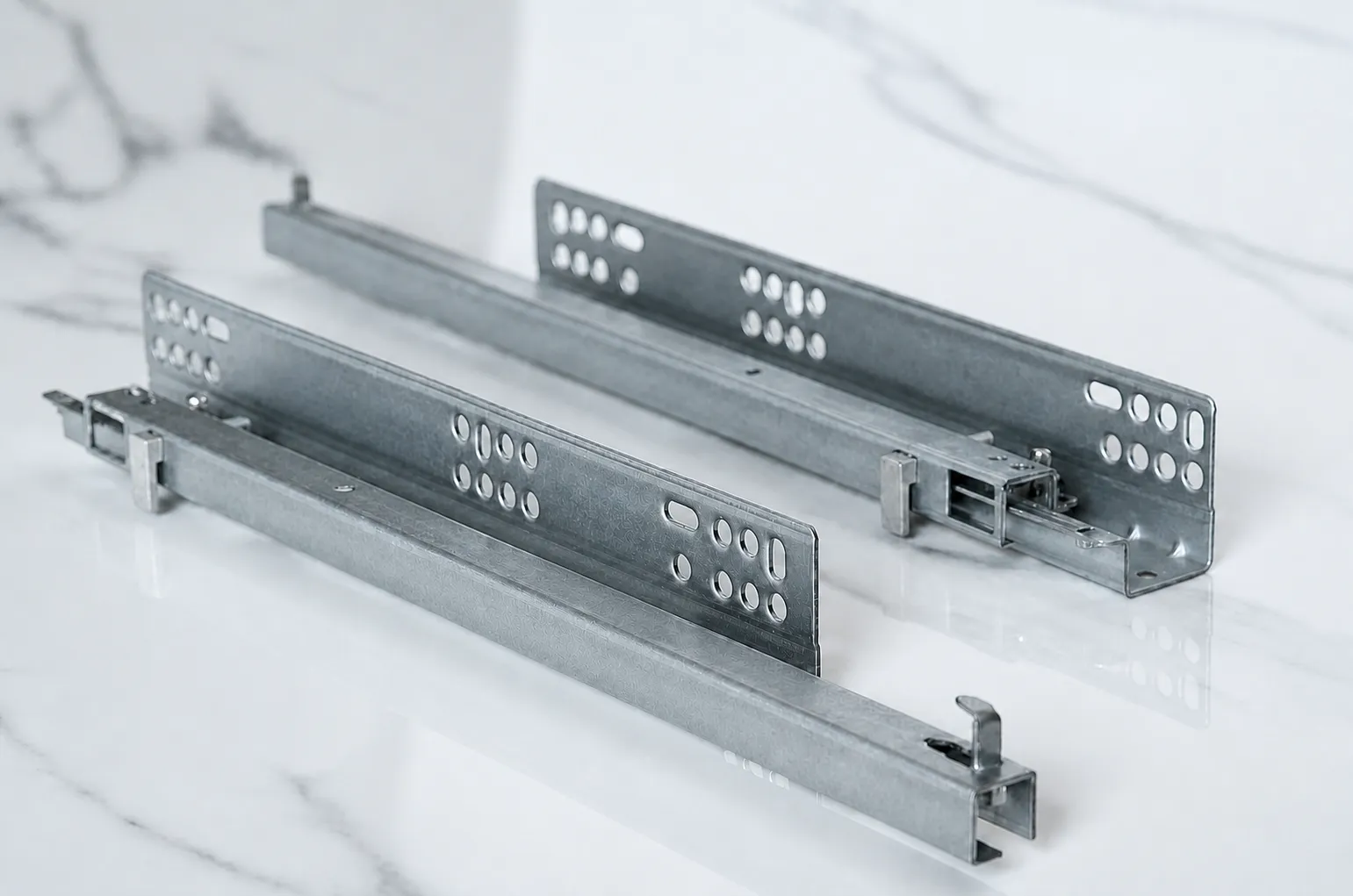
Standard solutions are products a manufacturer already makes and sells. The designs are proven, the production is established, and you choose from existing options.
OEM and ODM refer to custom work. In practice, OEM generally means a product made to your design or specification, while ODM generally means the manufacturer contributes design work as well. The exact boundaries vary between companies, so it helps to confirm what each term means with a given supplier.
SOTAL describes its range as running from standard drawer slide solutions to flexible OEM/ODM requirements, which is a useful reminder that these are two ends of a spectrum rather than separate worlds.
When standard products are enough
Standard options are often the best choice, and it is easy to underestimate them. They tend to offer:
- Faster start, since there is no development stage
- Lower risk, because the product is already proven in production
- Simpler reordering, with fewer variables to track
- Less effort from your technical team
If your drawer sizes and requirements fit common specifications, a standard slide can serve you well for years. Many successful cabinet and furniture lines run on standard hardware.
When custom work makes sense
Customization becomes worth considering in a few situations:
- Your product has unusual dimensions that standard options do not accommodate.
- You want a distinctive feature or finish that sets your product apart.
- You are building a branded product line and need hardware that matches a specific design.
- A project has particular requirements that off-the-shelf options cannot meet.
Customization offers precision, but it comes with more planning. You will need to provide clear specifications, accept a development phase, and often commit to certain volumes.
The hidden costs of going custom
Custom work is not just a matter of price. Consider:
- Time. Development, sampling, and approval take longer than ordering a standard product.
- Communication. More decisions mean more conversations, and unclear requirements lead to rework.
- Commitment. Custom products can come with minimum quantities, and switching suppliers later can be harder.
- Internal effort. Your team needs to define requirements and evaluate samples carefully.
None of these is a reason to avoid custom work. They are reasons to do it deliberately.
A simple decision process
You can approach the decision in steps:
- List your actual requirements: dimensions, load expectations, appearance, volumes.
- Check whether a standard product already meets them.
- If it nearly does, ask whether a small adjustment would close the gap.
- If nothing fits, consider a custom route and define the requirements in detail.
Often, the answer is a standard product with a modest tweak, which is cheaper and faster than a full custom development.
Why the supplier’s flexibility matters
A supplier that handles both standard products and custom work gives you room to change course. If your first project uses standard hardware and your next needs something special, you do not have to find a new partner. Flexibility also means the supplier understands the whole range of what is possible, which tends to improve their advice.
This is part of why a factory-direct relationship can be valuable. When the engineers who build the product are reachable, discussions about adjustments are more practical and less filtered.
Communication shapes the outcome
In custom projects especially, clear communication decides how smoothly things go. Share drawings, dimensions, and expectations in writing. Confirm what you have agreed. Ask the supplier to repeat back their understanding if anything is complex. Small misunderstandings at the start become large problems later.
SOTAL’s stated approach centers on clear communication and stable production planning. For custom work, those two factors matter more than any single feature, because they determine whether the finished product matches what you intended.
Planning for the long term
Even if your first order is small, think about future volumes and reorders. A product you cannot easily reorder is a liability. Ask how the supplier handles repeat orders and whether production will remain consistent over time.
Where to begin
If you are weighing undermount drawer slides in China for a new project, begin with your requirements and see how far standard options take you. Move to custom only when you have a clear reason.
The takeaway
Standard solutions are fast and low risk. Custom work offers precision at the cost of time and effort. The best route depends on your requirements, and a supplier who can support both gives you the freedom to choose sensibly.