
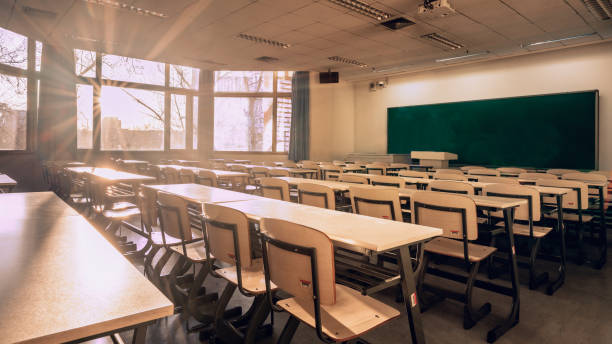
The humble desk has been a fixture of the classroom for centuries, but the role it plays in education has evolved dramatically. Today, choosing the right classroom desks is not simply a matter of finding surfaces large enough to hold a textbook. It involves understanding how students learn, how teachers teach, and how learning spaces need to adapt across a single school day.
Why Are Classroom Desks So Important to the Learning Environment?
Every student’s primary workspace is their desk. It is where they read, write, draw, type, collaborate, and think. A desk that is the wrong size, poorly positioned, or insufficiently designed creates friction at the very point where learning happens. That friction, repeated daily across a school year, accumulates into a significant barrier to educational achievement.
Well-chosen classroom desks remove that friction. They support students physically, give them sufficient workspace to organise their materials, and allow the kind of focused attention that academic tasks require.
What Are the Main Types of Classroom Desks Available?
The market for classroom desks has expanded considerably over the past decade, offering schools a wider range of options than ever before.
Traditional rectangular desks remain popular because of their simplicity and versatility. They stack easily for storage, arrange into a variety of configurations, and accommodate most standard classroom activities. For schools working within constrained budgets, quality rectangular desks represent a reliable choice.
Trapezoidal desks offer greater configurability. Their angled edges allow them to be pushed together to form hexagonal or circular group arrangements, then separated back into individual workstations. This makes them particularly well-suited to schools that practise mixed-mode teaching, alternating between individual and group work throughout the day.
Height-adjustable desks are gaining popularity in both primary and secondary settings. These allow each student to set their working surface to a comfortable height, accommodating the significant variation in body size that exists even within a single year group. Some models can also be raised to standing height, which research suggests can improve alertness and reduce the physical strain of prolonged sitting.
Corner and L-shaped desks provide larger work surfaces suited to subjects that require more space, such as art, design technology, or science. They are less commonly used in standard classroom settings but are invaluable in specialist teaching rooms.
How Do You Choose the Right Size Classroom Desk?
Desk sizing in educational settings is typically governed by British Standards, which specify appropriate table heights for different age ranges. Purchasing desks that comply with these standards ensures that the furniture is ergonomically suitable for the students using it.
As a general guide, the correct desk height for a seated student positions their forearms horizontally, with elbows bent at approximately ninety degrees and feet flat on the floor. When a desk is too high, students raise their shoulders and strain their upper bodies. When it is too low, they hunch forward and compress their spines.
For schools with mixed-age groups or wide variation within year groups, adjustable desks provide the most inclusive solution, ensuring every student has access to an appropriately sized workspace regardless of their individual height.
Can Classroom Desks Be Arranged to Support Different Teaching Methods?
Absolutely, and this is one of the most valuable considerations when selecting desks for a modern classroom. The arrangement of desks sends powerful signals to students about what kind of learning is expected.
Rows of forward-facing desks suggest individual, focused work and are well-suited to examinations, direct instruction, and independent reading. Clusters of desks pushed together to form group tables encourage discussion, peer learning, and collaborative projects. A horseshoe or U-shaped arrangement places the teacher in visual contact with all students simultaneously, supporting whole-class dialogue.
The key is to select desks that can be repositioned quickly and safely by both teachers and students. Lightweight materials with rounded edges and stable bases allow configurations to shift in minutes, giving teachers the freedom to adapt their environment to the lesson.
What Materials Are Best for Classroom Desks?
Durability and hygiene are the two primary concerns in a school setting. Desk surfaces need to withstand the daily demands of hundreds of young users, including writing pressure, accidental impacts, marker pen, and regular cleaning.
Melamine-faced chipboard surfaces are widely used because they are hard-wearing, easy to clean, and available in a range of colours. MDF cores provide a stable writing surface without the risk of warping that can affect some cheaper alternatives. Metal frames, particularly steel, offer the strength and longevity that school environments demand.
Avoid desks with complex surface textures that trap dirt or that cannot withstand standard cleaning products. In a post-pandemic environment, the ability to clean and sanitise surfaces quickly and effectively is more important than ever.
What Questions Should Schools Ask Before Buying Classroom Desks?
Before placing any order, it is worth taking time to consider a few practical questions. What age group will primarily use these desks? What subjects will be taught in this room? How many students will the room need to accommodate? Does the room require specialist configurations, such as computer workstations or science benches?
Working through these questions with a specialist supplier ensures that the final purchase meets the school’s actual needs rather than a generic average. Suppliers with genuine expertise in educational furniture will ask these questions themselves and use the answers to guide appropriate recommendations.
Conclusion
Classroom desks are foundational to the learning environment. The right choice, guided by an understanding of ergonomics, teaching methods, and practical durability, creates workspaces where students can focus, grow, and thrive. Investing in quality desks is investing directly in the quality of education.